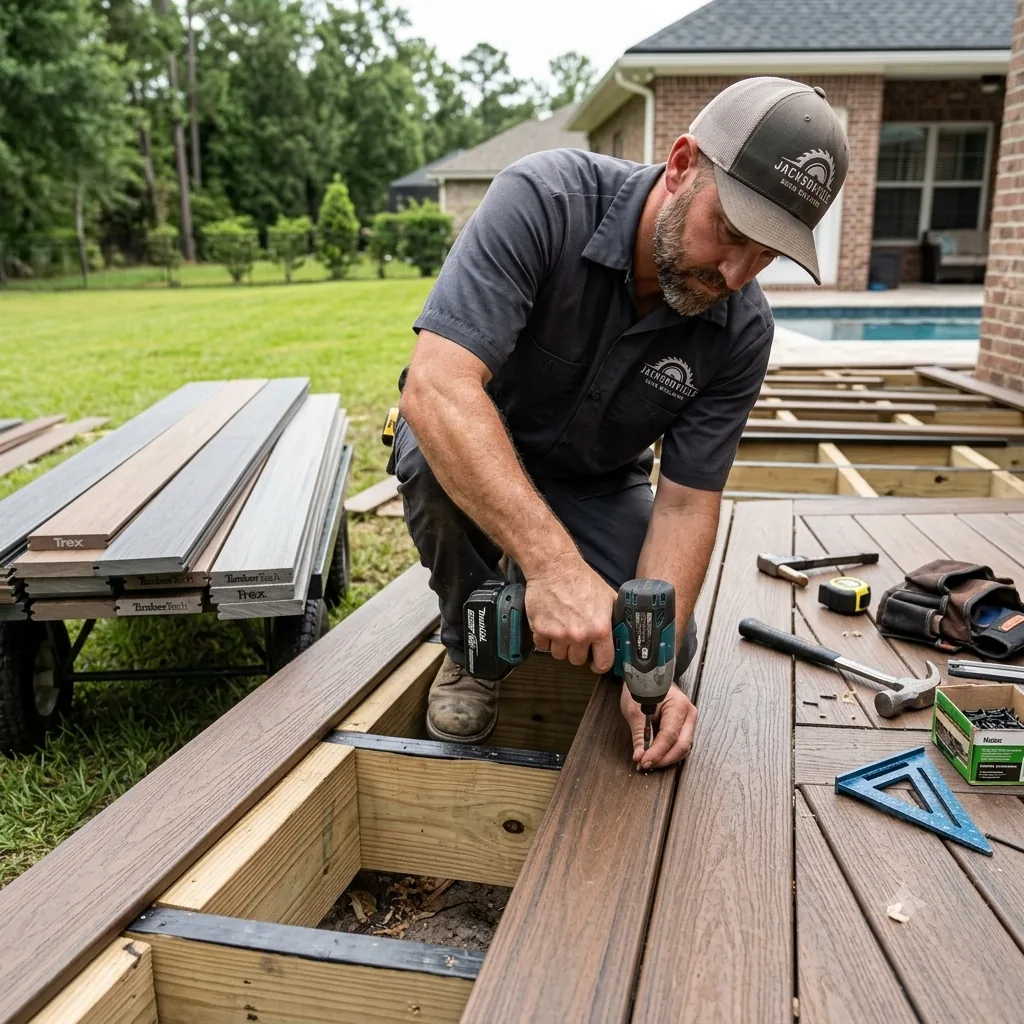
Composite Deck Building
Low-maintenance Trex, TimberTech and Deckorators decks that resist rot, fading and Florida heat — with 25-year warranties.
Learn more
St. Augustine is the oldest city in the country, and that shows up in the work. Historic homes with real constraints, coastal and marshfront properties, and a St. Johns County permitting process that takes historic districts seriously. It’s some of the most interesting deck work we do.
If your home sits in one of St. Augustine’s historic districts, adding or modifying a deck is not a routine permit. Historic preservation review can govern materials, visibility from the street, dimensions and design detail. What you can build, and what it can look like, may be genuinely constrained.
This isn’t a reason not to build — it’s a reason to plan properly. We ask early whether your property falls under historic review, because it changes the design conversation from the first sketch. Designing something beautiful and then discovering it can’t be approved wastes everyone’s time.
Outside the historic districts, St. Augustine builds like the rest of St. Johns County — standard permitting, standard code, with coastal considerations where relevant.
St. Augustine has a lot of housing stock with age on it, and much of the deck work we do here is repair and replacement rather than new construction. The recurring findings are the ones we see on any older deck: a ledger that was nailed rather than bolted, no flashing behind it, rot at the base of posts, and railings that don’t come close to current code for height or baluster spacing.
Older decks also frequently used the wrong fasteners for pressure-treated lumber, which shows up as rust streaks and screws backing out of the boards. It’s cosmetic until it isn’t — corroded fasteners lose strength at the connections.
The good news is that a lot of these decks have salvageable structure. Resurfacing over a sound frame is our best-value repair and it makes an old deck look new for a fraction of a rebuild.
Much of St. Augustine is on or near saltwater — the Matanzas, the Intracoastal, tidal marsh. Where that’s true, the coastal rules apply: stainless fasteners and connectors, decking chosen for salt and UV resistance, and elevation set with flood zones in mind.
Marshfront properties bring one more thing: no-see-ums. If you’re near the marsh and you’re considering a screened porch, standard fiberglass mesh will not stop them — they pass straight through it. You want no-see-um mesh. Homeowners who learn this the hard way end up re-screening a brand-new porch, which is a frustrating and avoidable expense.
Screened porches, because of the marsh and the mosquitoes. Composite conversions, because homeowners are tired of maintaining wood in a salt-and-humidity climate. Deck repairs and resurfacing, because the housing stock is old. And genuinely custom decks on the newer properties out toward the county, where there’s room to design something ambitious.
Whatever your project, we build it here. Each of these links goes to a full breakdown of what’s involved, what it costs and how we do it.
We’ll come out to your St. Augustine property, measure, talk through materials and design, and send you a written, itemized quote within 48 hours — at no cost and with no obligation. Request your estimate or call (904) 555-0142.
Low-maintenance Trex, TimberTech and Deckorators decks that resist rot, fading and Florida heat — with 25-year warranties.
Learn more
Classic pressure-treated and tropical hardwood decks, built to code with marine-grade fasteners for lasting strength.
Learn more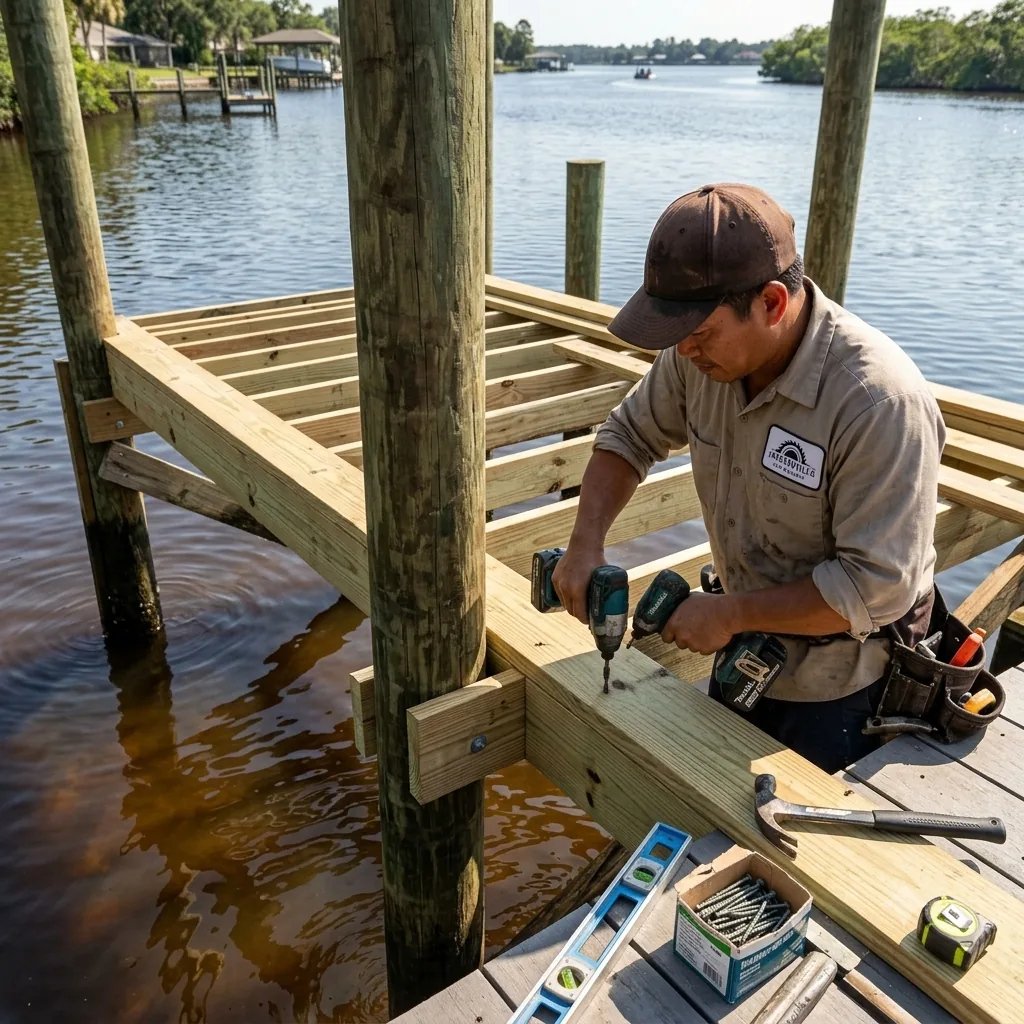
Riverfront and Intracoastal docks and elevated decks built with stainless hardware and flood-zone-compliant framing.
Learn more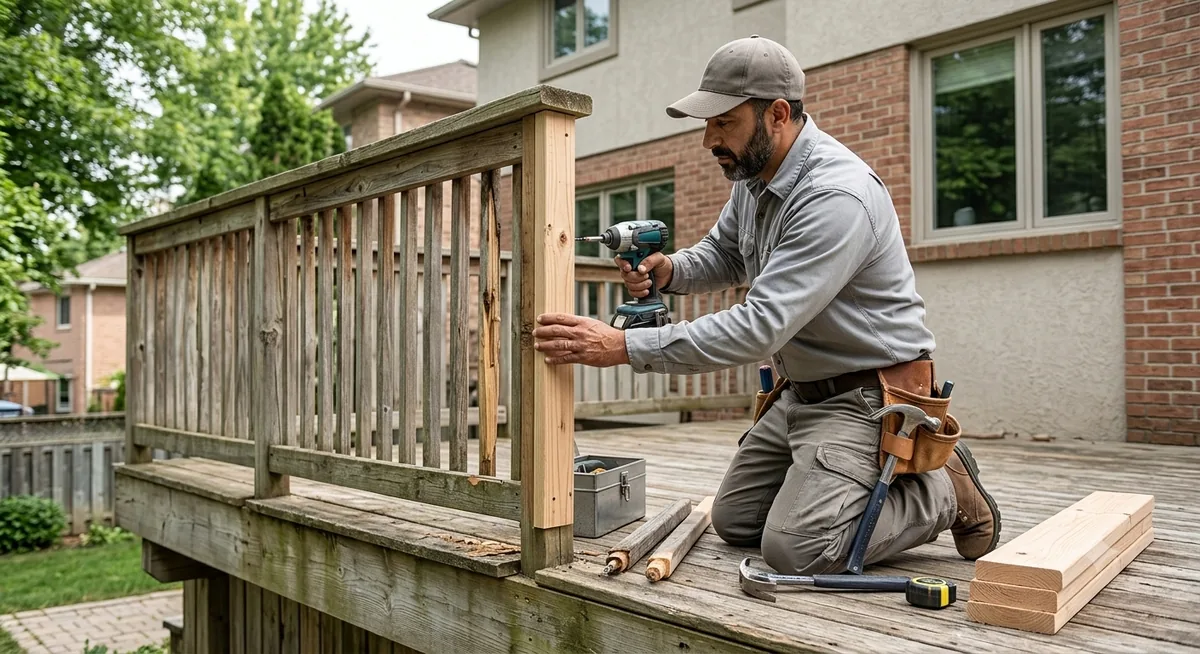
Rotted boards, wobbly rails, failing joists and storm damage — repaired fast with a free safety inspection first.
Learn more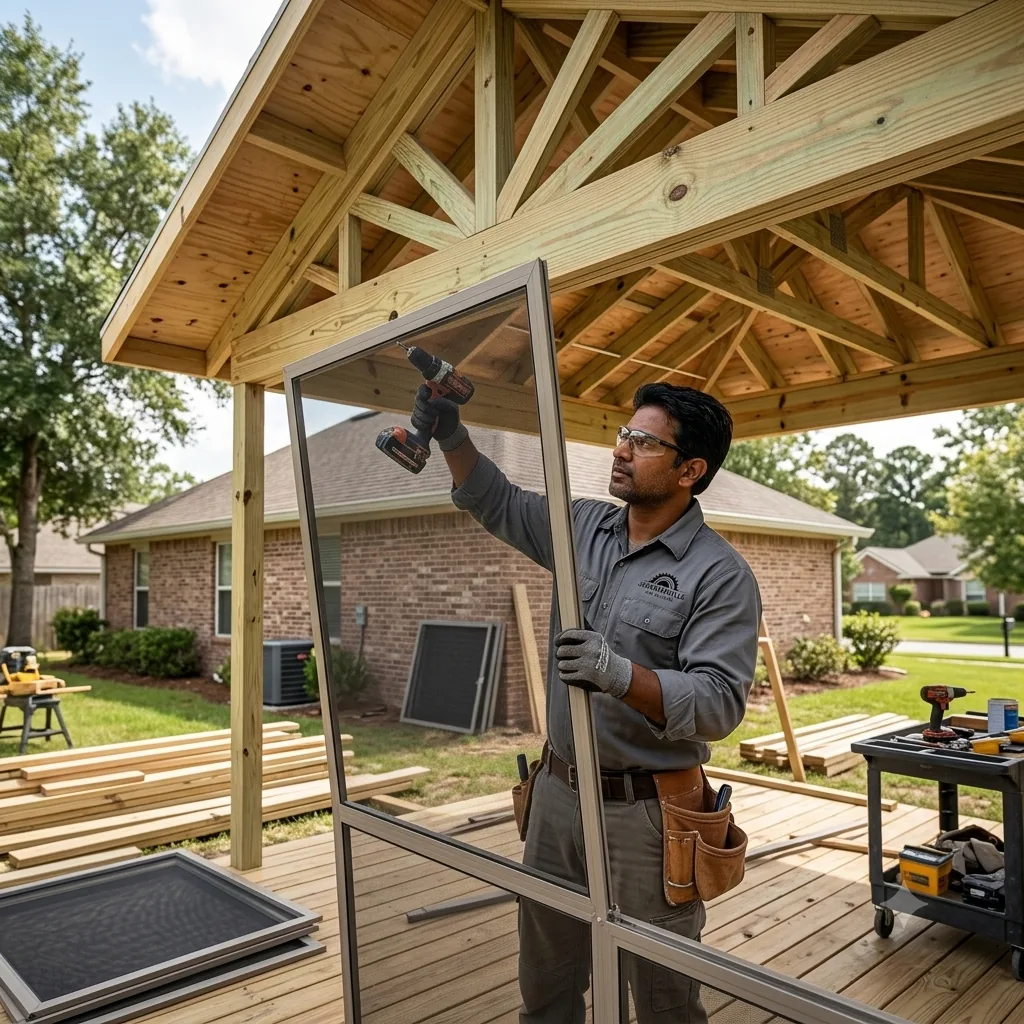
Beat the bugs and the sun with screened enclosures and covered decks that extend your outdoor living year-round.
Learn more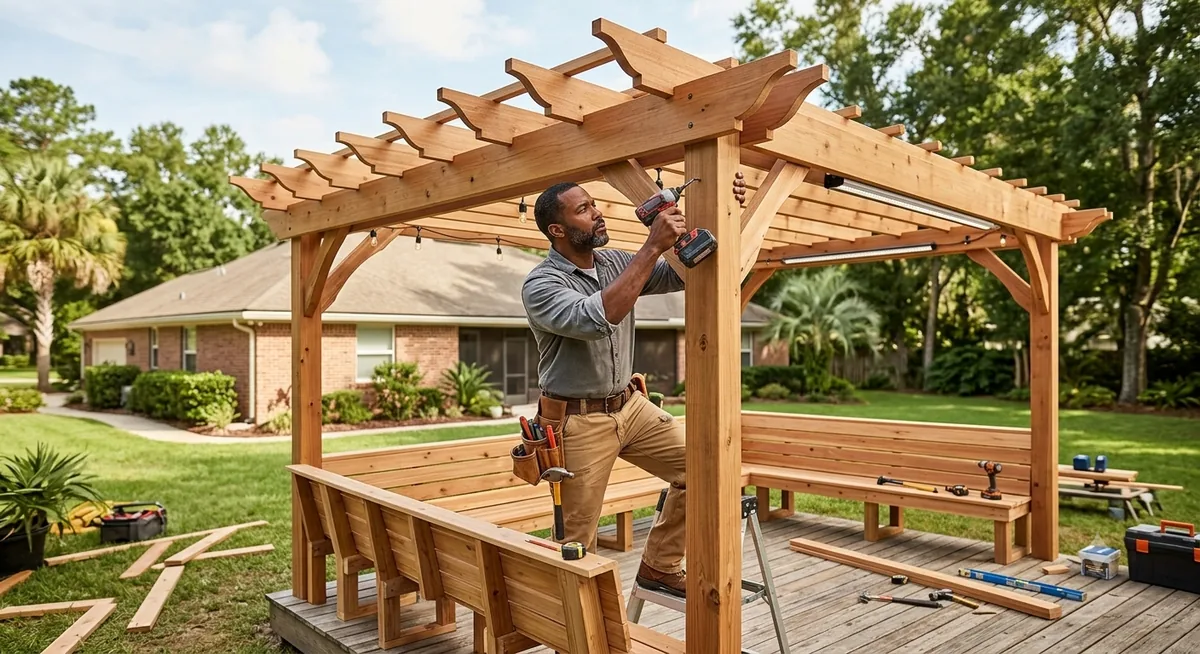
Pergolas, LED deck lighting, built-in benches, planters and outdoor kitchens to complete your backyard oasis.
Learn moreUsually yes, but it isn’t a routine permit. Historic preservation review can govern materials, visibility from the street, dimensions and design detail. Tell us at the very first conversation if your property falls under historic review — it shapes the design from the first sketch, and designing something that can’t be approved wastes everyone’s time.
Yes, and historic properties carry an additional preservation review layer on top. Outside the historic districts, permitting follows standard St. Johns County process. We handle drawings, submission and inspections either way.
Because much of St. Augustine is near tidal marsh, and no-see-ums are small enough to pass straight through standard fiberglass screen. Homeowners who screen a porch with standard mesh near the marsh often end up re-screening it. Use no-see-um mesh from the start — it cuts airflow slightly and it solves the problem.
It depends on the frame, and older decks here often have salvageable structure. If the posts, beams and joists are sound, resurfacing typically costs 40–60% of a rebuild and makes the deck look new. If we find a failing ledger, rotted posts or widespread joist rot, replacement is the better spend. Free inspection, honest answer.
A ledger nailed instead of bolted, and unflashed — which is both a deck safety issue and a route for water into your home’s wall. Rot at the base of posts. Railings that don’t meet current code for height or baluster spacing. And the wrong fasteners for treated lumber, showing up as rust streaks and screws backing out.
If you’re on or near saltwater — the Matanzas, the Intracoastal, tidal marsh — yes. Salt corrodes standard and galvanized fasteners at the structural connections. Inland St. Augustine properties away from salt influence have more latitude, but we’ll assess your specific site.
Broadly in line with the region: roughly $22–$35 per square foot for pressure-treated wood, $35–$60 for composite, installed. Historic district requirements, coastal hardware and screened enclosures all move the number. Resurfacing an existing sound frame comes in considerably lower than a full rebuild.
Very. Between the marsh, the mosquitoes and the no-see-ums, a screened enclosure is often what makes a St. Augustine backyard genuinely usable at dusk. Note that roofed structures are a heavier permit than an open deck, and historic districts may constrain the design.
That’s much of the challenge and the pleasure of working here. Proportion, railing detail, board direction and material choice all matter enormously on a historic home. A deck that fights the architecture is a shame, and in a historic district it may not be approvable anyway.
Standard builds run one to two weeks of construction after permitting, with permitting adding one to three weeks. Historic district review adds meaningfully to the front end — build that into your expectations. Screened porches take longer to construct.
Strong fit, particularly near salt. It won’t rot in the humidity, won’t splinter, resists salt and UV, and stops the endless cycle of sealing wood. On historic properties, material choice may be constrained by review — we’ll navigate that with you.
We cover the region including Ponte Vedra, Nocatee and Jacksonville Beach. See all service areas.
Free estimates across Jacksonville and Northeast Florida. Call now or request your quote online.
(904) 555-0142