Most decks don’t fail all at once. They warn you — a soft board here, a wobbly rail there, a bounce that wasn’t there last year. Catch it early and a repair is cheap. Ignore it and you’re buying a new deck, or worse. We do free honest inspections across Jacksonville, and we’ll tell you plainly whether you need a $600 fix or a rebuild.
Free Deck Inspection in Jacksonville — Why We Start There
We’d rather look at your deck than guess at it, and we’d rather tell you it’s fine than sell you work you don’t need. Plenty of decks that look terrible are structurally sound and just need a new surface. Plenty of decks that look fine are hiding a rotted ledger. You can’t tell from a photo, and neither can we.
So we come out, we get under the deck where the truth lives, and we give you a straight read on the structure, the surface and the connections — plus a written price for the options.
Deck Safety Inspection Checklist: What We Look For
The ledger. This is the board bolting your deck to your house, and it is the number one cause of catastrophic deck failure nationally. We look at how it’s fastened (bolts, not nails), whether it’s flashed, and whether water has been running behind it into your wall. A bad ledger is not a “keep an eye on it” item.
Posts and footings. We look for rot at the base where the post meets concrete or soil, for posts that have shifted, and for footings that were undersized to begin with. Post rot at grade is extremely common in Florida.
Joists and beams. We probe for soft spots, check the hangers, and look for the rust that tells us the wrong fasteners were used with treated lumber. A bounce underfoot usually traces back to here.
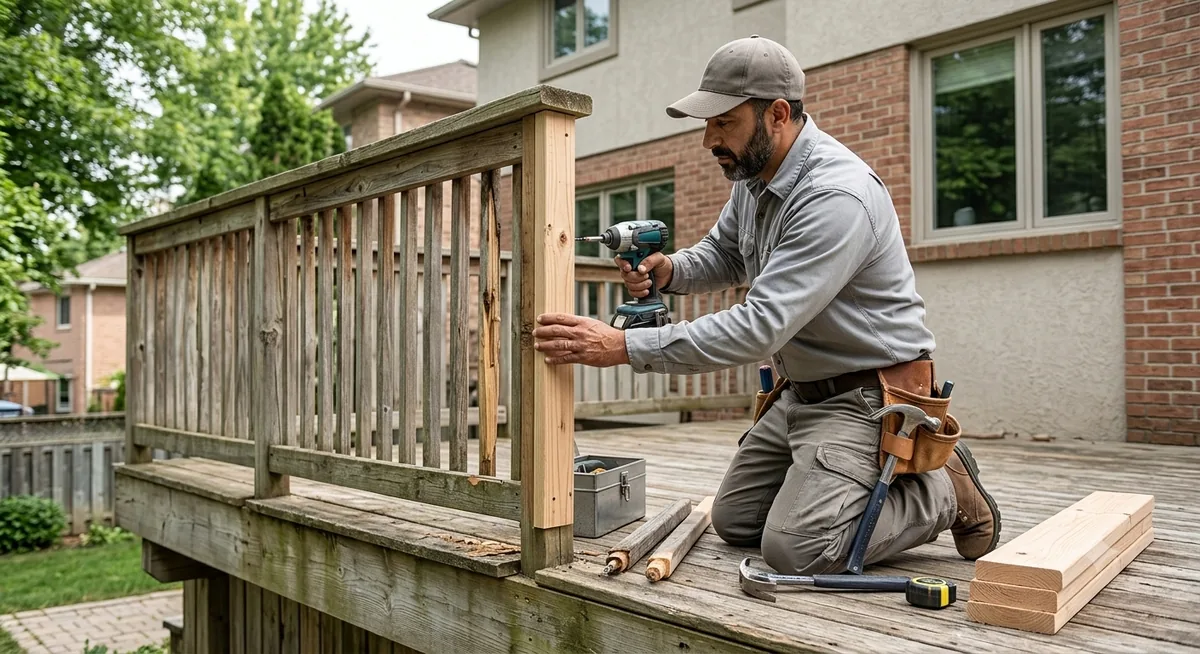
Railings. We push on them. Hard. A railing that moves is a railing that will fail when someone leans on it at a party, and it’s one of the most common serious defects we find.
The surface. Soft boards, splinters, cracks, popped fasteners. This is what you notice first and it’s usually the least structurally urgent thing on the list.
Common Deck Repairs in Jacksonville: Boards, Railings, Joists and Ledgers
Board replacement. Individual rotted, cracked or cupped boards swapped out and fastened properly. Fast and inexpensive.
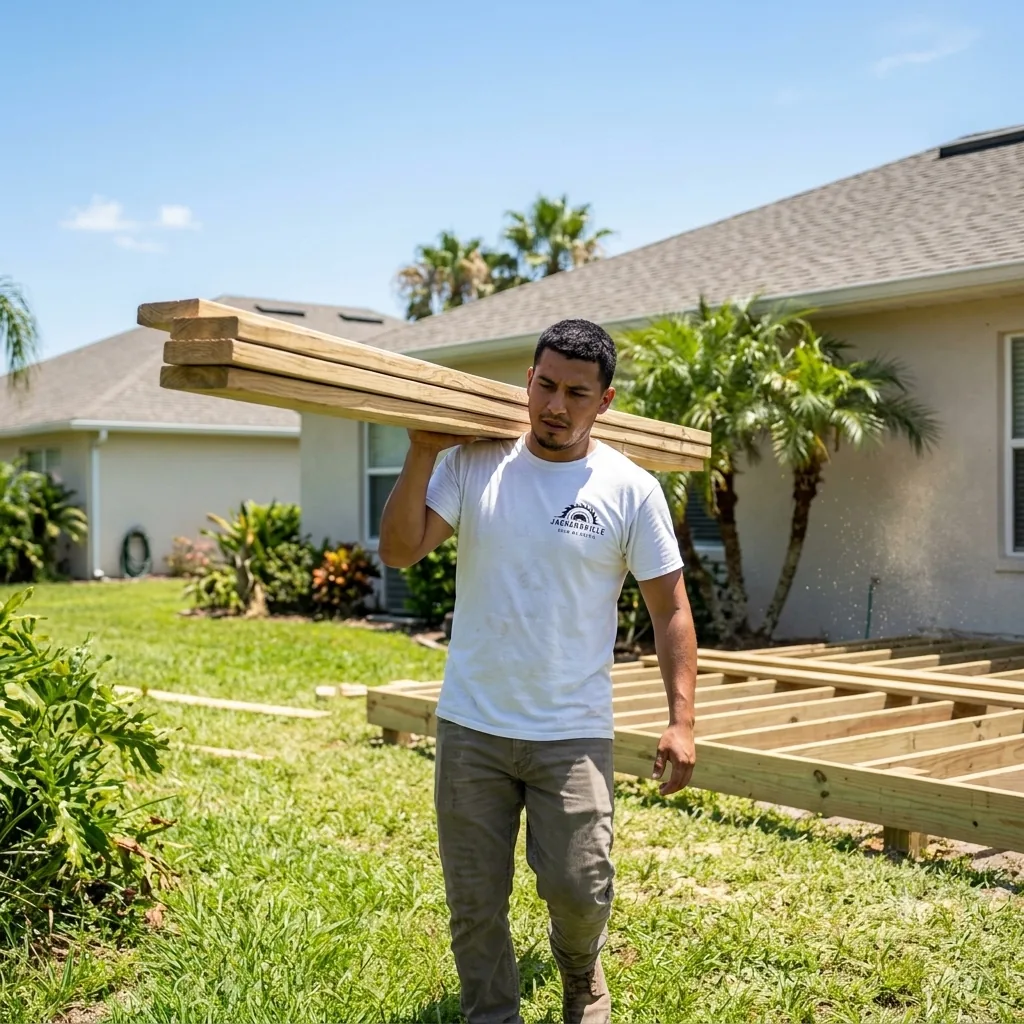
Re-decking / resurfacing. If the frame is sound but the surface is spent, we strip the old boards and lay a whole new deck surface — often in composite — on the existing structure. This is the single best-value repair we do and it makes a tired deck look brand new for a fraction of a rebuild.
Railing replacement. Rebuilding wobbly, rotted or out-of-code railing. Modern code requires specific heights and baluster spacing, and older decks frequently don’t comply.
Joist and beam repair. Sistering or replacing compromised framing members and correcting hardware. This is real structural work and it’s where honest inspection matters most.
Ledger repair and re-flashing. Correcting the attachment to the house and installing proper flashing so water stops getting behind it.
Post and footing repair. Replacing rotted posts and correcting footings that have shifted or were never adequate.
Storm damage. After a Jacksonville storm we get a lot of calls about torn-off sections, fallen limbs and racked railings. We can usually get a deck safe quickly and then schedule the full repair.
Fastener replacement. Popped, rusted or backing-out screws replaced with the correct hardware for treated lumber and for your distance from salt water.
Should You Repair or Replace Your Deck? How to Decide
The honest rule of thumb: if the structure is good, repair. If the structure is failing, replace.
Specifically, if the posts, beams, joists and ledger are sound and only the surface and railing are spent, resurfacing is almost always the right call — you keep the bones and buy a new skin, typically for 40–60% of a rebuild. But if we find widespread joist rot, a failing ledger, undersized footings or a deck that was never built to code, patching it is throwing money into a structure that’s going to keep failing. At that point a rebuild is cheaper over five years and dramatically safer.
We price both options and we explain which one we’d choose if it were our house. Then it’s your call.
Signs Your Jacksonville Deck Is Unsafe and Needs Repair Now
Deck collapses hurt people, and they almost always trace to the same short list: a nailed-instead-of-bolted ledger, rotted posts, and failed railings. If we find one of those on your deck, we will tell you clearly that it needs attention now. That’s not an upsell — it’s the reason we do the inspection for free.
Get a Free Deck Repair & Restoration Estimate in Jacksonville
We’ll come out, measure, put real material samples in your hands and send you a written, itemized quote within 48 hours. There’s no charge and no obligation. Request your free estimate or call (904) 555-0142.
It ranges widely because “repair” covers everything from swapping three boards to rebuilding a ledger. Small board and fastener repairs are often a few hundred dollars. Railing replacement and resurfacing run into the thousands. Structural framing repair depends on how much is affected. We inspect free and give you a written price before any work.
If the posts, beams, joists and ledger are sound and only the surface and railing are worn, resurfacing typically costs 40–60% of a rebuild and is the clear winner. If we find widespread framing rot, a failing ledger or undersized footings, patching is throwing money at a structure that will keep failing. We price both and tell you which we’d choose.
Wobbly railings, soft or spongy boards, a noticeable bounce when you walk, rust streaks or screws backing out, rot at the base of posts, and any movement where the deck meets the house. Any of those warrant an inspection soon — the ledger and railing issues in particular are how people get hurt.
The ledger is the board attaching your deck to your house. Improper ledger attachment is the leading cause of deck collapse nationally. It should be through-bolted — not nailed — and properly flashed so water can’t run behind it into your wall. We check it first on every inspection.
Yes, if the frame passes inspection. It needs to be structurally sound, correctly spaced and free of rot. When it checks out, resurfacing over the existing structure — often in composite — is the best-value repair we do. If it doesn’t check out, we’ll say so rather than lay new boards on a failing frame.
Yes, and it’s a common call after Jacksonville storms — torn-off sections, limb damage, racked railings. We can usually make a deck safe quickly and then schedule the full repair. If you’re filing an insurance claim, we can provide documentation of the damage and the scope of repair.
Yes, and there’s no obligation attached to it. We’d rather look at your deck and tell you it’s fine than have you pay for an assessment. If it does need work, you’ll get a written price and an honest explanation of what’s urgent versus what can wait.
Cosmetic repairs like swapping a few boards typically don’t. Structural work — replacing joists, rebuilding the ledger, changing posts or footings — often does, and a full resurfacing sometimes does depending on scope. We’ll tell you what your specific job requires and handle the permit if one is needed.
Small board and fastener repairs are often done in a day. Railing replacement typically takes one to a few days. A full resurfacing usually runs several days to a week. Structural framing repair depends on how much has to come apart. We give you a firm schedule with the quote.
It’s a signal worth taking seriously. Bounce usually means the joists are undersized, spaced too far apart, or weakening — or that the beams or posts are compromised. It isn’t always an emergency, but it isn’t something to ignore either. Let us get underneath it and look.
Often yes, and it’s more common than you’d think, especially on older decks and DIY builds. We can correct railing heights and baluster spacing, upgrade the ledger attachment, and add or fix hardware. If the deck is fundamentally undersized, bringing it to code may cost more than rebuilding — we’ll be honest about which side of that line you’re on.
Almost certainly the wrong fasteners were used. The preservatives in pressure-treated lumber are corrosive to ordinary steel, and salt air near the water accelerates it dramatically. The fix is replacing them with hot-dipped galvanized or, near salt water, stainless hardware. Left alone, corroded fasteners lose strength at the connections.
Ready When You Are
Let’s Build Your Dream Deck
Free estimates across Jacksonville and Northeast Florida. Call now or request your quote online.