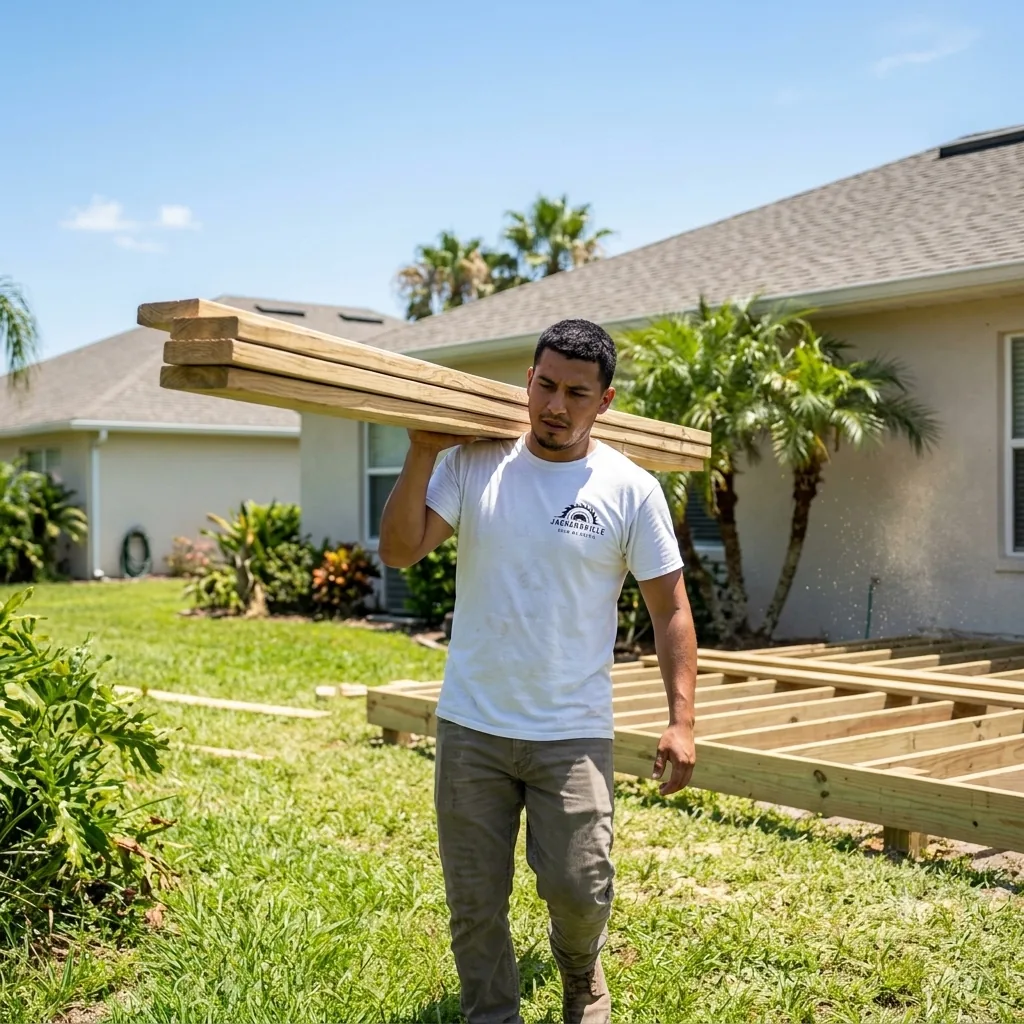
Screened Porch vs. Covered Deck: Which One Should You Build?
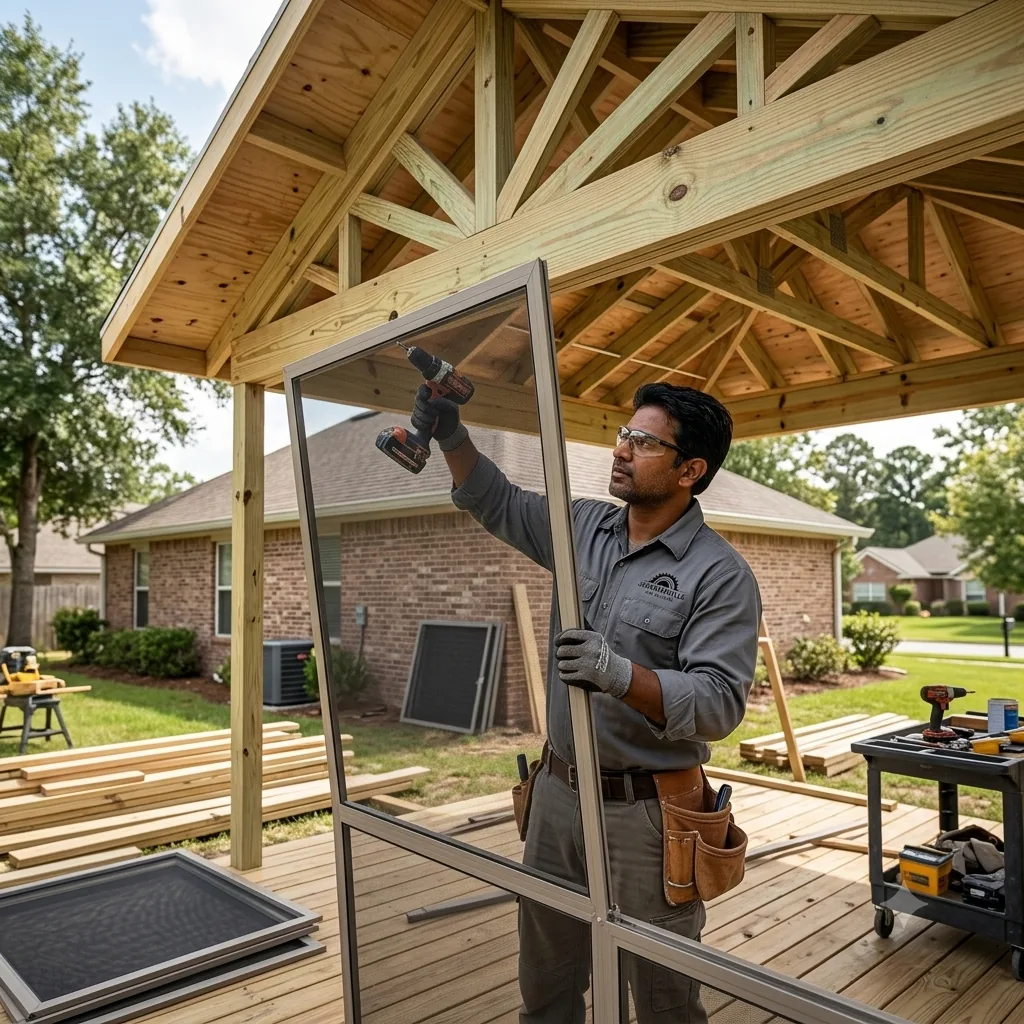
Two of the most common questions we get in Northeast Florida are basically the same question: “How do I actually use my deck in summer?” The answers are a screened porch or a covered deck — and they are not interchangeable.
What each one actually does
A covered deck has a roof and open sides. You get shade. You get rain protection. You keep the breeze and the open, connected-to-the-yard feeling. What you don’t get is any protection from insects.
A screened porch has a roof and screen walls. You get shade, rain protection, and a complete stop on bugs. What you give up is some airflow, some openness, and some money.
That’s the entire trade. Everything else is detail.
How to decide
Ask yourself when you actually want to be outside.
If the answer is dusk and evening — dinner outside, drinks after work, watching the kids run around until dark — you want screen. Dusk is exactly when mosquitoes and no-see-ums arrive, and no amount of shade helps with that.
If the answer is midday — grilling, lunch outside, a shady spot to sit while the yard is in use — a covered deck may be all you need. Bugs are less aggressive in bright midday sun, and the openness is genuinely pleasant.
If you’re near the marsh, the river or the Intracoastal, weight the answer heavily toward screen. The insect pressure near water in Northeast Florida is not a minor inconvenience; it’s the reason a lot of beautiful decks go unused.
The combination nobody thinks of
Our favorite solution, and one we build often: screen the main seating area, and leave an adjacent open or covered deck section for the grill and for people who want sun.
You get a bug-free room for dinner and a place to cook without smoking out the enclosure. It costs more than either alone and it’s usually the right answer for a family that actually lives outside.
The screen mistake that ruins new porches
This one matters and it catches people constantly.
Standard fiberglass insect screen stops mosquitoes. It does not stop no-see-ums. They are small enough to fly straight through the standard weave.
If you are anywhere near marsh — which in Northeast Florida means much of Mandarin, St. Augustine, Fernandina Beach, Ponte Vedra and Nocatee — and you screen your porch with standard mesh, you will have built a beautiful enclosure that no-see-ums enter freely at dusk. Homeowners discover this the first evening they try to use it, and then they pay to re-screen a brand-new porch.
Use no-see-um mesh. It’s a finer weave, it costs a little more, it reduces airflow slightly, and it is completely worth it.
The other thing to get right: a fan
Every client who put a ceiling fan in their screened porch is glad they did. The ones who skipped it call us later.
A screened porch in a Jacksonville August without moving air is a hot box. The screen slightly reduces the breeze, and Florida summers don’t provide much breeze to begin with. A fan is the difference between a room you love and a room you avoid from June to September. Wire for it during the build.
What it costs
A screened enclosure typically adds $8,000–$20,000 on top of the deck, depending on size, roof style and how complex the tie-in to your existing roofline is. A covered deck without screens costs less. Both are a bigger permitting exercise than an open deck, because a roofed structure involves wind loads and a structural tie-in to your house.
More on both on our screened and covered decks page.
Thinking about a deck project?
Free on-site estimate, real material samples, written itemized quote within 48 hours.